The Role of Content in Successful Link Building: A Complete Q&A Guide
Why Content Matters in Link Building
Link buildings not about getting links from other websites. The best way to build links is to give people a reason to talk about your content, recommend it, and use it.
That is why content is the foundation of link building.
If you create something like an article, a study, or a tool, people will want to link to it because it provides value to their audience.
Google says that your content should be made for people, not for search engines. It should be original, trustworthy, and not just made to trick search rankings.
In this guide we will explain the role of content in link building what kinds of content can get links, how to create resources that others want to link to and how to make your content work for search results and other tools.
Q1. What is the role of content in link building?
The role of content in link building is to give websites a reason to link to you.
A link from another website is more valuable when it is given because your content has information, proof or resources that make their content better.
For example a website writing about marketing might link to your website if you have:
- research on the marketing industry
- A detailed study on marketing strategies
- A page with statistics
- A practical guide on how to do something
- A case study of a marketing campaign
- A useful tool
- An authoritative definition of a marketing term
- A visual resource or original infographic
Google says that links help them understand your content and find your pages, while good anchor text helps users and Google understand where they are going.
In words, good content gives people something to link to, and smart outreach helps them find it.
Q2. Why is high-quality content important for earning backlinks?
High-quality content is important because it provides value that’s not easy to find
Google says that your content should offer information, research, analysis, and real value compared to other pages.
Lets compare two articles:
Article A: is a piece that just repeats what many other websites say.
Article B: is a guide with data, expert opinions, examples and clear pictures.
Article B is more likely to get links because it gives writers, reporters and other website owners reasons to use it.
So content quality is not about SEO it can directly affect whether you get links from others.
Q3. What types of content attract backlinks?
There is no one type of content that always gets links. The best kind of content depends on the people, the industry, the topic and what is missing.
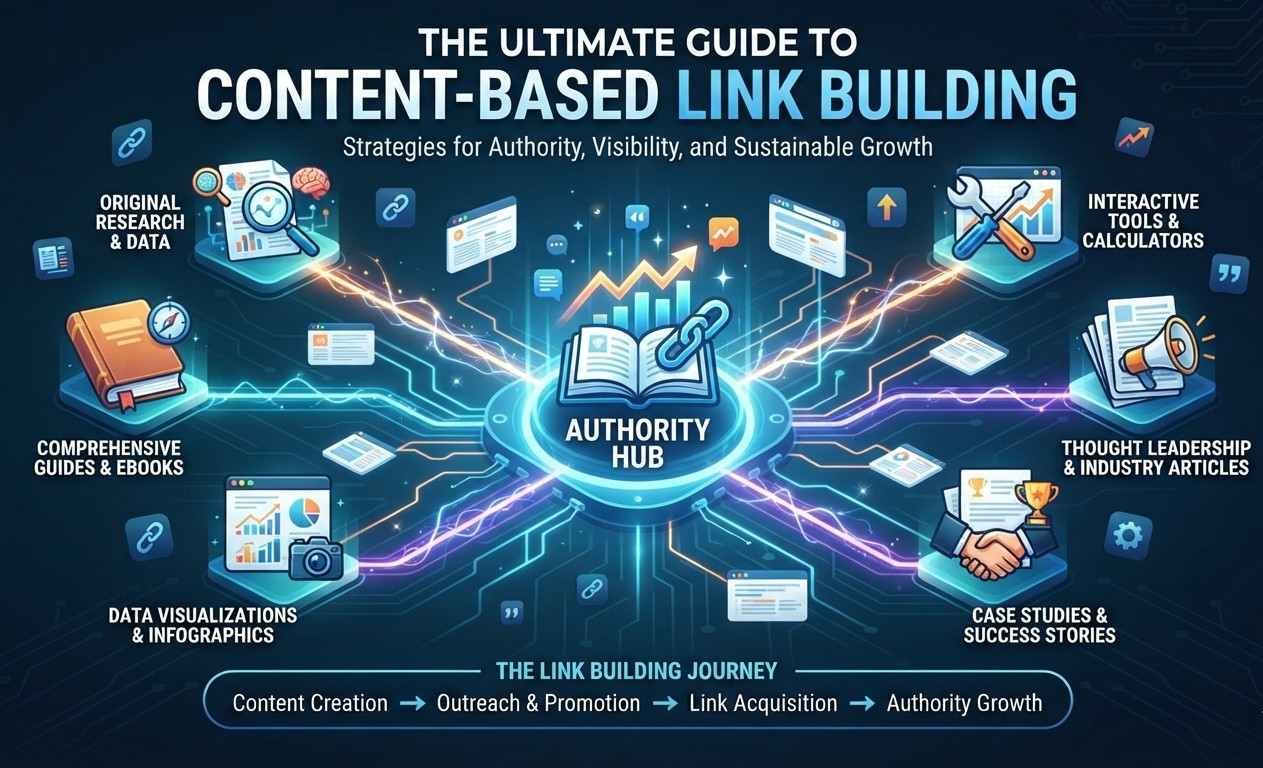
However some types of content that often get links include:
-
Original research
Research can be used by others as a source.
Examples include:
- Include industry
- Surveys
- Consumer research
- Original experiments
- Market analysis
- Trend studies
-
Statistics and data pages
A page with statistics can be a go-to place for journalists and content creators.
-
Comprehensive guides
Detailed guides can get links when they become useful for people, experts, or people in a group.
-
Case studies
Case studies show proof and real lessons, not just general advice.
-
Expert roundups
Good expert input can add views. Help people get attention in their field.
-
Visual content
Charts, diagrams, pictures, maps and other visuals can be used when they explain things well.
-
Tools and calculators
Useful tools can get links naturally because websites want to send their visitors to resources.
-
Original definitions and explainers
If your content clearly explains a topic other sites may use it when helping their readers.
Q4. How does content marketing support link building?
Content marketing and link building work well together because content creates something and promotion increases its visibility.
A practical process looks like this:
Research → Create → Optimize → Promote → Earn Mentions → Earn Links → Build Authority
For example a company could publish a study share the results through email and social media contact journalists and sites. Make the research easy to use.
The goal is not to ask people to link to your content but to make something linking to and let the right people know it’s there.
Q5. What makes content “link-worthy”?
Content thats worth linking to has least one of these traits:
Originality: It has information that others can’t copy easily.
Authority: It shows knowledge and trust.
Usefulness: It solves a problem.
Evidence: It backs up what it says with research or data.
Depth: It answers questions well.
Timeliness: It talks about something now.
Uniqueness: It offers a perspective that others don’t have.
Shareability: People want to talk about it or use it.
A good test is to ask:
Would another site improve its page by using this resource?
If the answer is no the content might need a reason to be used.
Q6. How can original research improve a link-building campaign?
Original research can make your website a main source of information.
Imagine a company surveys 1,000 customers. Publishes the results. A marketing site discussing customer behavior might use the study of doing its survey.
To maximize the value of original research:
- Clearly explain the methodology.
- Publish the important findings.
- Provide useful statistics.
- Include charts or visualizations where appropriate.
- Explain limitations.
- Make important data easy to quote and reference.
- Promote the findings to relevant publishers and experts.
- Update the research when new data becomes available.
This can also help show that your content is expert things that Google talks about in its people-content advice.
Q7. How does content quality affect SEO and backlinks?
Content quality can influence SEO in several interconnected ways.
High-value content can:
- Attract organic backlinks.
- Encourage people to share or reference a resource.
- Improve topical relevance.
- Support internal linking.
- Increase opportunities for search visibility.
- Establish subject-matter expertise.
- Give other publishers a reason to cite your site.
The goal is not to create links but to make things that naturally get attention.
Q8. Should keywords be used in link-building content?
Yes. In a way.
Keywords help search engines and people understand what a page is about. Using the keyword too many times can make content seem forced and might be seen as keyword stuffing.
Google warns against using keywords in a way that seems forced and says to write
Of forcing a phrase like ” link building strategy” into every paragraph use different ways like:
- Link-building strategy
- Earning quality backlinks
- Content-driven link building
- Backlink strategy
- Editorial links
- SEO content promotion
Using words that make sense is better than repeating the phrase over and over.
Q9. What is the relationship between anchor text and content?
Anchor text helps show what the page being linked to is about.
Google says to use anchor text and to avoid using too many keywords.
For example:
Weak:
“Click here”
Better:
“Complete guide to technical SEO”
Potentially over-optimized:
“Best affordable technical SEO services for small businesses”
The best anchor text fits into the sentence and explains what the page is, about.
Q10. Can AI-generated content be used for link building?
AI can help with research, planning, ideas, editing and other parts of the content process.
Using AI to make low-quality pages just to get search traffic or trick rankings is not a plan.
Googles current guidance focuses on the quality and purpose of the content than treating AI assistance itself as the issue. Google also says that if automation substantially contributes to content creation publishers should consider whether explaining how and why it was used would help readers understand the content.
For AI-assisted link-building content, prioritize:
- Human expertise
- Original insights
- First-hand experience
- Fact checking
- Original research
- Useful examples
- Expert review
- Clear sourcing
- Editorial quality
AI can accelerate production; it cannot replace genuine value.
Q11. How should content be optimized for AI search and answer engines?
Content intended to perform across AI-powered search and answer experiences should be clear, factual, structured and easy to interpret. A strong approach includes answering the question using headings providing supporting detail using structured information demonstrating expertise avoiding claims and building depth.
Cover related questions than creating dozens of pages that barely address a subject. This approach supports both readers and systems that need to extract answers, from web content.
Q12. What is geo-SEO. How does content support link building?
Geo-SEO is about making it easier for people to find your business when they search for things in a place. Content can support local link building through resources such as:
- Local market research
- City-specific industry reports
- Regional statistics
- Local business guides
- Community projects
- Local event resources
- Neighborhood guides
- Regional case studies
- Local expert interviews
For example a real estate company could share a report about the housing market in a city. Local newspapers, groups that help businesses, people who do research and websites that serve the community might use that report. The main thing is that the content is useful. Just making a lot of pages with city names on them is not the same as making something that people really need.
Q13. How can businesses create content that earns backlinks?
Start by thinking about what information’s important to the people who would use your content. For example in the health field this could be trends in wellness or resources about health in a community. For estate this could be reports about the market in a neighborhood. Then look for groups or people who would want to use that information, such as news sites, local business groups, schools, community groups organizations that work in the industry, magazines and other companies that are related.
The content should be helpful on its own even if it does not get a link. If you make something that people find useful then getting links will happen naturally.
Q14. What role does internal linking play in content-driven link building?
Links from your site are just as important as links from other websites. Internal links help visitors and search engines find pages and see how different topics are connected. Google suggests using words for links and making sure that important pages are linked from other pages on your site.
A content hub might be a guide that has pages linked to it. This helps people and search engines move around your site easily.
Q15. How should you promote content after publishing it?
After you publish content the work is not done. A good way to share it could be to find websites that cover the topic reach out to people who write about it make the message personal explain why the resource is useful show the data or ideas and offer a chance to use it in their content. Also use ways to share the content.
Building relationships is better than sending messages to a lot of people. The message you send should answer one question: why would this website’s readers care about this resource?
Q16. Are paid backlinks a link-building strategy?
Buying links to get search rankings is not a good idea. It goes against Google’s rules about not using links. Google says that buying or selling links for the purpose of swapping links making a lot of links automatically or using tricks to get links is not allowed.
Paid ads and sponsored content are different. Google says that paid or sponsored links should be clearly marked. The safer way is to focus on making content promoting it properly making sure it is relevant to people and building real relationships.
Q17. What are common content mistakes that hurt link building?
One mistake is making content that’s the same as what everyone else is saying. There may be a reason to mention it. Another mistake is focusing much on how many words are in the content. More words do not mean content. Google clearly says that it does not care about the number of words.
Another mistake is not promoting the content after it is published. Great content can be missed if no one knows about it. Another mistake is using many keywords in the links. The words used in links should be natural and not forced.
Another mistake is buying links. This can cause problems with Google’s rules about spam. Another mistake is making content for search engines of for people. Google recommends making content for people and a specific group of users.
Q18. How do you measure the success of content-driven link building?
Do not just look at how links you get.
Useful measures include
- Number of referring domains
- Quality and relevance of referring domains
- Editorial placement
- Organic traffic
- Rankings for relevant queries
- Referral traffic
- Assisted conversions
- Leads or sales
- Brand mentions
- Content engagement
- Growth in topical authority
A single good link from a trusted source can be better than links from unimportant places. Focus on how how trustworthy and how well the content does for business not just how many links you have.
Q19. What is the best content strategy for link building?
A good way to build links is to follow a plan that includes finding things that people are not talking about choosing topics that can get links making something that’s better than what is already out there making it good for people and for search engines adding things to make it more trustworthy sharing it with the right people getting links from real editors and keeping the content updated.
Make content that people find useful. Then the links will come on their own. Focus on making relevant and useful content instead of trying to trick search engines.
Frequently Asked Questions About Content and Link Building
What is content-led link building?
Content-led link building is a way for companies to make content that other people will want to link to. This method is about making useful and relevant content that other people will want to use.
Does content quality really affect backlinks?
Yes good original, helpful and trustworthy content gives others a reason to link to your site. If the content is not special or helpful there may not be a reason for others to link to it.
What content earns backlinks?
Research, numbers, detailed guides, tools, studies, expert opinions, pictures and unique ideas about a topic can all get links. There is no way to get links but making content that is good and useful is the main thing.
How backlinks should an article have?
There is no number that works for every article. The important things are how good the links are, how relevant they are, how they are placed and how helpful the content is. Focus on making content that people want to link to of trying to get a certain number of links.
Are backlinks important for SEO?
Links are still important for finding and understanding how pages connect. Good SEO should not be about trying to trick links. Google says that links are one of the things it uses to see if something is relevant and to find pages.
Can guest posting help with link building?
Guest posts can be helpful if they give value to the people who read the site.. Using guest posts just to get links that are good for search engines can be against Googles rules.
Should I use exact-match anchor text?
No, not in amounts. Use words that fit naturally in the text. Google specifically says that putting many keywords into the links is not a good idea.
Does AI-generated content hurt SEO?
Using AI is not the problem. The bigger issue is whether the content is helpful original and made for people or just to trick search engines. Focus on making useful and relevant content no matter how it is made.
How can I make content more likely to appear in AI-generated answers?
To make content that appears in AI-generated answers make sure your content is clear answers questions directly. Gives proof for the ideas it presents. It should also provide information that people can use properly.
Content that is clear and answers questions directly is very helpful. This kind of content supports ideas with proof. Shows knowledge. It also gives information that people can use properly.
How does local content help link building?
Local content is very helpful for getting links. When you do research and have numbers that’re specific to a region it gives local websites and groups a real reason to talk about your site. This is because local content has information that’s useful to them.
Local research and numbers are important. They give websites and groups a reason to talk about your site. This is because they have information that people in that area find useful.
What is the biggest link-building mistake?
The biggest mistake is thinking that getting backlinks is the goal. Instead you should focus on making sure your content is useful and building relationships. The best links usually come from offering something that’s worth talking about.
People make a mistake when they think that getting backlinks is the goal. They should focus on making content and building relationships instead. This way they can get links from websites.
Final Takeaway
Content is part of long-term link building.
You should not try to make hundreds of pages. Then look for ways to add links. Instead you should make things that people really want to mention such as research, useful tools and guides. These things should have data and analysis from experts. They should also have information thats relevant to an area.
Then you should make sure people can find those things through promotion and reaching out.
For SEO and AI search and answer engines and for visibility the same basic idea is important: make content thats really helpful and trustworthy and clear and easy to understand.
Google’s advice always says that content should be made for people. They warn against ways that try to trick the search rankings including sending links.
So the modern way to build links is simple: Create something worth citing → Make it discoverable → Build relationships → Earn relevant editorial links → Strengthen your overall search visibility.
That is what content does in good link building. Content makes something mentioning. It makes it easy to find. It builds relationships. It gets links from sites. It improves your search visibility.